Brazil Restricts Social Features on Licensed Gambling Platforms
 50
50 
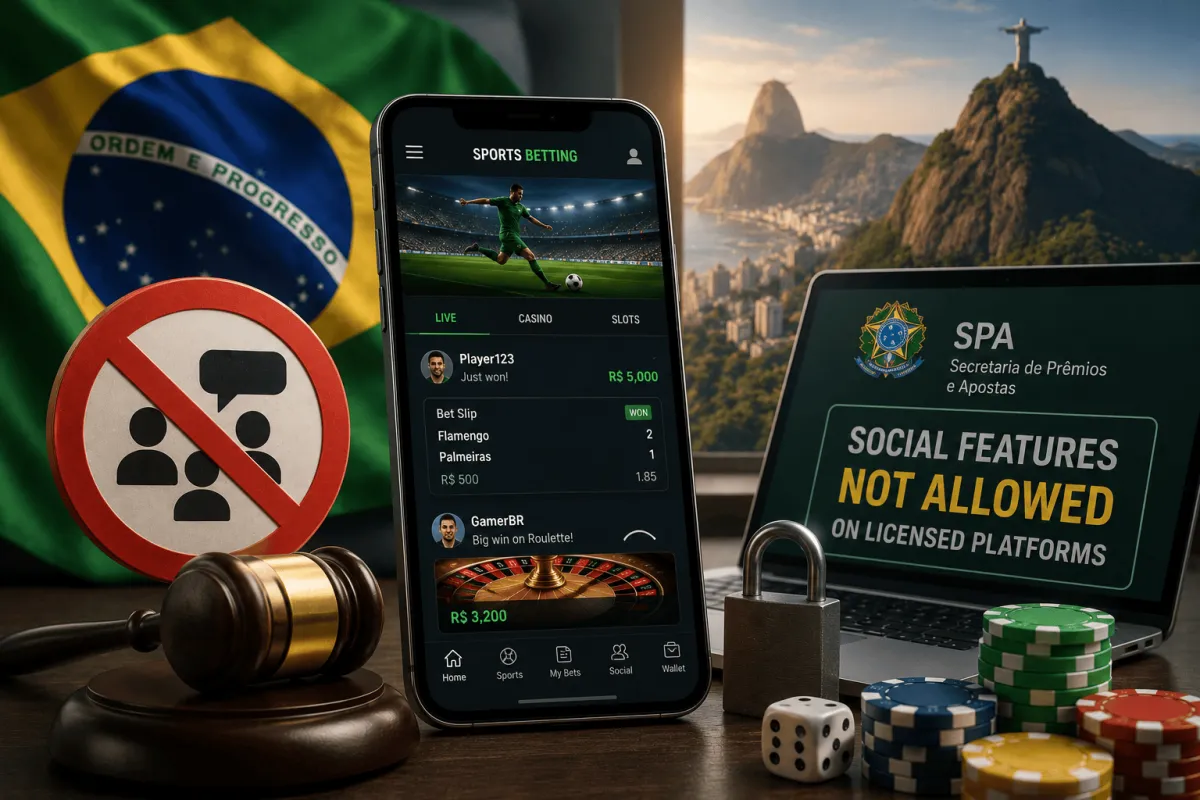
Brazil’s Secretariat of Prizes and Betting has ruled that licensed online gambling operators cannot introduce social media-style features that may influence customer behaviour.
The decision followed a request from Kaizen Gaming, which asked whether Betano could create an integrated social environment for registered users. The proposed tools would have allowed players to share betting slips, highlight favourite casino games and display wins on their profiles.
The regulator rejected the proposal, arguing that these functions could encourage longer gambling sessions, increase engagement and push users towards riskier betting behaviour. It also concluded that sharing betting activity or winnings between users represents a form of social interaction, even when customers cannot communicate directly.
The SPA referred to Ordinance SPA/MF No. 722/2024, which prohibits licensed betting platforms from incorporating social interaction tools. The regulator said:
Operators found to be in breach of the ordinance could face administrative sanction proceedings.
The ruling applies to all operators licensed under Brazil’s Bets framework, rather than only Betano. Licensed platforms may still offer loyalty programmes and reward schemes, but these cannot encourage customers to gamble more frequently or change their usual betting habits.
Brazil’s regulated online gambling market launched on 1 January 2025 without welcome bonuses and several other promotional incentives. Operators have since had to adjust their marketing and customer engagement strategies.
Further changes are expected before the end of 2026. Brazilian lawmakers are considering stricter licensing rules, tighter advertising restrictions and stronger responsible gambling protections, including proposals to ban betting with borrowed money or credit.